Friday, July 27, 2012
All the Children Are Insane pitch video
http://vimeo.com/m/46201494
A two-minute pitch that I directed, filmed and edited for All the Children Are Insane, a feature film that I hope to direct soon. Check it out.


Thursday, August 18, 2011
The Year of Parenting Dangerously
It will go so fast.
That’s what everyone tells you when you have a child, when you’re about to have a child, when you think you want to have a child, when you even look at a child -- enjoy each moment because they go fast. I didn’t really believe it. I was a child once, and, for me, those years weren’t fast at all. 4th Grade: Crawling. 7th grade: Sluggish. High school? So ponderous, I thought we were moving backwards on some Benjamin Button ish.
But I felt that way because I was the kid. The one with no job, bills or serious responsibilities. The one whose greatest contribution to the world was that I more or less single handedly introduced N.W.A. and Public Enemy to my junior high school. (You're welcome.) So, of course time felt slothful, elastic, listless... I had nothing to compare it to.
But this little girl, man. She’s like a different person every day. Yes, one who often screams for no apparent reason at the exact moment that whomever I was watching on TV or speaking to on the phone says something important. And yes, one for whom we’re still changing diapers and snatching crayons out of her mouth and the one because of whom, we are forcibly subjected to the ulcer-inducing Upside Down Show. But Amina is still, besides all that, a different person than she was a few weeks ago or a few months ago.
It hasn’t been an easy year for me. I want film. Well, film costs and 2011 is where I pay. Unless you’ve been paying absolutely no attention at all to me this year, you know that I’ve spent the better part of this year doing everything in my power to push my most recent original screenplay, All the Children Are Insane, into production. We’ve written a business plan, scouted locations, (verbally) hired some cast and most of our crew, developed an in-depth marketing plan, gotten the script to the manager of our first choice to play the eldest brother… and then, silence. Well, that’s not all the way true. My producing partner, Will Clevinger, and I, are still courting and meeting with potential investors and more or less living our lives as though we’ll be shooting the film next week. But in terms of the level of physical activity I had, in, say, May, things have slowed a bit. And while this film is far closer to being made than any of my other scripts, I have had my fair share of the doubt and despair common to all filmmakers trying to bring a new vision into a more or less apathetic world. Which I'm sure has not always made it easy to share a house with me.
So I am thankful that Amina brings perspective. Though I’m clearly her second favorite parent by a country mile, it is a fact that she said my name first and kissed me on the lips first. (I'm a dad, that's really all I need.) She doesn’t care where I’ve been all day or whether or not I’m grumpy. She knows who I am and she wants my approval, affection and attention. It’s that simple. And food. She wants a lot of that also. And no matter where my head is when I come through the door, she lifts my spirits without saying a word. (Or at least a word that I can understand.)
Which is not to say that we don’t get on each other’s nerves sometimes. She’s kind of a rough little girl and reacts to any form of discipline like a gangster in 1930s Warner Brothers films. And, once, just once, I would like to wake up on my own. And the approval, affection and attention thing has its limits: The last time that my wife and daughter left me home alone, I was so excited, I couldn’t even settle my brain to figure out what I wanted to do. So, of course, I ended up doing nothing.
Many parenting rules/cliches have been proven true already:
1) I love her more than I love myself. (Which says a lot because I'm on some serious Jasonphilia.)
2) The first time I disciplined her for being defiant, it hurt me more than it hurt her. (I think.)
3) I see the best of myself and my wife in her.
4) Raising a child produces (or unleashes) reservoirs of patience previously undiscovered.
5) Just because it is on the floor does not mean one should try to eat it.
6) Hiding my car keys under the couch is NOT COOL, infant or not.
I am, almost always, in search of the future; unable to assess how far I’ve come because I was ignoring the journey. But with Amina, finally, I’m present day like never before. I’m not looking forward to her being 10 or 16 (God, no) or 26. I recognize these things will happen, Lord willing, but I’m content to see each day and each change, each minor movement in her life.
What I failed to accept from the Holy Bible (Matthew 6:34) or from the parts of my life that were accelerated (Hi Pittsburgh!), Amina has taught me in her own little way: the future will be here faster than you think.
Happy birthday my Mina face.
Love,
Da-da
That’s what everyone tells you when you have a child, when you’re about to have a child, when you think you want to have a child, when you even look at a child -- enjoy each moment because they go fast. I didn’t really believe it. I was a child once, and, for me, those years weren’t fast at all. 4th Grade: Crawling. 7th grade: Sluggish. High school? So ponderous, I thought we were moving backwards on some Benjamin Button ish.
But I felt that way because I was the kid. The one with no job, bills or serious responsibilities. The one whose greatest contribution to the world was that I more or less single handedly introduced N.W.A. and Public Enemy to my junior high school. (You're welcome.) So, of course time felt slothful, elastic, listless... I had nothing to compare it to.
But this little girl, man. She’s like a different person every day. Yes, one who often screams for no apparent reason at the exact moment that whomever I was watching on TV or speaking to on the phone says something important. And yes, one for whom we’re still changing diapers and snatching crayons out of her mouth and the one because of whom, we are forcibly subjected to the ulcer-inducing Upside Down Show. But Amina is still, besides all that, a different person than she was a few weeks ago or a few months ago.
It hasn’t been an easy year for me. I want film. Well, film costs and 2011 is where I pay. Unless you’ve been paying absolutely no attention at all to me this year, you know that I’ve spent the better part of this year doing everything in my power to push my most recent original screenplay, All the Children Are Insane, into production. We’ve written a business plan, scouted locations, (verbally) hired some cast and most of our crew, developed an in-depth marketing plan, gotten the script to the manager of our first choice to play the eldest brother… and then, silence. Well, that’s not all the way true. My producing partner, Will Clevinger, and I, are still courting and meeting with potential investors and more or less living our lives as though we’ll be shooting the film next week. But in terms of the level of physical activity I had, in, say, May, things have slowed a bit. And while this film is far closer to being made than any of my other scripts, I have had my fair share of the doubt and despair common to all filmmakers trying to bring a new vision into a more or less apathetic world. Which I'm sure has not always made it easy to share a house with me.
So I am thankful that Amina brings perspective. Though I’m clearly her second favorite parent by a country mile, it is a fact that she said my name first and kissed me on the lips first. (I'm a dad, that's really all I need.) She doesn’t care where I’ve been all day or whether or not I’m grumpy. She knows who I am and she wants my approval, affection and attention. It’s that simple. And food. She wants a lot of that also. And no matter where my head is when I come through the door, she lifts my spirits without saying a word. (Or at least a word that I can understand.)
Which is not to say that we don’t get on each other’s nerves sometimes. She’s kind of a rough little girl and reacts to any form of discipline like a gangster in 1930s Warner Brothers films. And, once, just once, I would like to wake up on my own. And the approval, affection and attention thing has its limits: The last time that my wife and daughter left me home alone, I was so excited, I couldn’t even settle my brain to figure out what I wanted to do. So, of course, I ended up doing nothing.
Many parenting rules/cliches have been proven true already:
1) I love her more than I love myself. (Which says a lot because I'm on some serious Jasonphilia.)
2) The first time I disciplined her for being defiant, it hurt me more than it hurt her. (I think.)
3) I see the best of myself and my wife in her.
4) Raising a child produces (or unleashes) reservoirs of patience previously undiscovered.
5) Just because it is on the floor does not mean one should try to eat it.
6) Hiding my car keys under the couch is NOT COOL, infant or not.
I am, almost always, in search of the future; unable to assess how far I’ve come because I was ignoring the journey. But with Amina, finally, I’m present day like never before. I’m not looking forward to her being 10 or 16 (God, no) or 26. I recognize these things will happen, Lord willing, but I’m content to see each day and each change, each minor movement in her life.
What I failed to accept from the Holy Bible (Matthew 6:34) or from the parts of my life that were accelerated (Hi Pittsburgh!), Amina has taught me in her own little way: the future will be here faster than you think.
Happy birthday my Mina face.
Love,
Da-da
Monday, July 25, 2011
RIP Amy Jade Winehouse


It's okay in the day I'm staying busy
Tied up enough so I don't have to wonder where is he
Got so sick of crying
So just lately
When I catch myself I do a 180
I stay up clean the house
At least I'm not drinking
Run around just so I don't have to think about thinking
That silent sense of content
That everyone gets
Just disappears soon as the sun sets
This face in my dreams seizes my guts
He floods me with dread
Soaked in soul
He swims in my eyes by the bed
Pour myself over him
Moon spilling in
And I wake up alone
If I was my heart
I'd rather be restless
The second I stop the sleep catches up and I'm breathless
This ache in my chest
As my day is done now
The dark covers me and I cannot run now
My blood running cold
I stand before him
It's all I can do to assure him
When he comes to me
I drip for him tonight
Drowning in me we bathe under blue light
His face in my dreams seizes my guts
He floods me with dread
Soaked in soul
He swims in my eyes by the bed
Pour myself over him
Moon spilling in
And I wake up alone
And I wake up alone
And I wake up alone
And I wake up alone
"Wake Up Alone" by Amy Winehouse
RIP
Saturday, July 16, 2011
The Man Who Would Be King
I originally wrote this around the time Brooklyn's Finest came out. Wesley Snipes saw it and even though he never commented on it, he began following me on Twitter shortly thereafter. Then I pulled it because I hoped to have it published in a prominent film journal that shall remain nameless. But they gave me crickets, so I'm bringing it back. Hope you likes. And, yes I will say it - Free Wesley Snipes.
The Man Who Would Be King
Jason Gilmore on Wesley Snipes

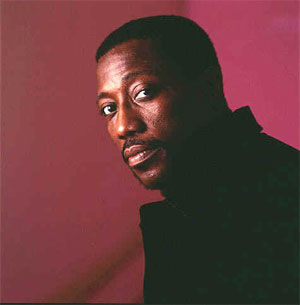
To talk about Wesley Snipes in a historical context, you almost have to reach back to Woody Strode - the former pro athlete turned actor -- to get such a raw mixture of athleticism, stage presence and charisma, clustered in a dark-skinned, high-cheekboned package, that, while not conventionally handsome, has sent more than their fair share of female hearts swooning. The two men have the same initials, sure, and were born six days apart, but Woody came of age at a time when comedic roles or dancing roles would've meant playing the buffoon. As a result, he was unable to show his range as an actor until well into his 50s. And he never had the opportunity to become a major star.
This is an important distinction. Let's be clear: Denzel Washington took the Sidney Poitier template and ran to the moon, just as Kobe Bryant took Michael Jordan’s and did the same. But there was no real blueprint for Wesley Snipes, no rational explanation for the variety of ways that he electrified audiences throughout the 1990s. In a row they came: his magnetic star turn as Nino Brown in New Jack City, the savvy basketball hustler Sidney Deane in White Men Can't Jump, the blond, evil warlord Simon Phoenix in Demolition Man, the first commercial black superhero as Blade.
The 1991 double punch of Jungle Fever and New Jack City certified it: Wesley Snipes was a star. Action scripts began to pour in and the first he signed onto, Passenger 57, was an absolute smash. He filled a nice void. He was the first black man regularly kicking butt in mainstream Hollywood films, ever. Others had tried. Jim Brown. Fred Williamson. But they were too early. Jim Kelly? He couldn’t even stay alive through Enter the Dragon. Then, by the ‘80s, it was all about making people laugh. The biggest black stars were comics. By the end of the decade, however, even those blacks were asserting themselves more. Eddie Murphy played an African prince in the ever popular Coming to America, then directed himself in the maligned but profitable Harlem Renaissance-era comedy Harlem Nights. Arsenio Hall injected a badly needed dose of soul into late night television, with his groundbreaking, eponymous talk show. By the 1990s, thanks in no small part to the popularity of rap music, our collective distance from segregation, and the emergence of take no prisoners black filmmakers like Spike Lee and John Singleton, the stage had been set for a black man to save everybody on the plane, without breaking a sweat. A brash star was needed for a brash decade.
He was a real alpha male, the kind black Hollywood hasn’t seen since. Denzel was the man, but of course he was the man, he was Denzel. He was an ideal. Something about Wesley Snipes screamed accessibility. If Denzel was The Beatles, Snipes was the Rolling Stones. Anti-establishment. Rough around the edges. Who in the hell let this guy in the door? But it was all deception. He wasn't that rough around the edges. He was an actor. In 1995 he starred in three movies, in which he played 1) a drag queen, 2) a New York City transit cop and 3) a married man who shares a tender, non-sexual night with a vulnerable, separated Angela Bassett. An actor. An actor without limits, who surpassed Hollywood's expectations, then the African-American community’s, then found himself more or less blacklisted and relegated to straight to DVD bins at Best Buy.
WESLEY TRENT SNIPES was born on July 31st, 1962 in Orlando, Florida. His father was an aircraft engineer, his mother a teacher’s aide. They divorced when he was an infant. He grew up in the Bronx, where, as he recently said, ‘The Bronx teaches you to survive. It's like, ‘Bring it on!’” He was a small, tough child, who gravitated to martial arts early and thought, deep into his adolescence, that he wanted to be a dancer. His aunt entered him in talent shows as a child, which resulted in his being cast in an off-Broadway play in middle school. After attending I.S. 131 and the LaGuardia High School of Music and Art (best known as the school from Fame), his life was thrown into a tailspin when his mother -- concerned about their rough neighborhood -- decided to move the family back to Orlando. The pace of the south bored him, but it was in the drama department at Jones High School that he fell in love with acting.1 He did puppet theater and mime for several competitions, and starred in school productions of The Odd Couple and A Midsummer Night’s Dream. After graduation, he caught a Greyhound bus back to New York and enrolled at the prestigious theater program at the State University of New York at Purchase (Edie Falco, Stanley Tucci and Ving Rhames were there around the same time). Being one of a handful of black students there was difficult for Snipes. He found solace in the teachings of Malcolm X and became a Muslim.
After leaving the school, he got married, and, like many actors, worked an assortment of odd jobs to provide for his young family, while auditioning for various parts. His athleticism served him well: his screen debut was as a high school football player (at the age of 24) in the Goldie Hawn-starring, Bad News Bears knockoff Wildcats. (It was also the screen debut of Snipes’s future comrade Woody Harrelson.) The same year, he played a boxer in the underrated Streets of Gold, holding his own alongside brooding upstart Adrian Pasnar and the great Klaus Maria Brandauer. Even in this early stage, the vintage Snipes persona is almost fully formed: street smart, hip, boisterous, yet with great comedic timing.
A year later, he was chosen by none other than Martin Scorsese to play Michael Jackson’s bully in the long version of the video for “Bad.” It was only supposed to be a three day shoot, but it turned into nearly a month. Jackson's high performance level, even in rehearsal, inspired Snipes, even as the higher visibility opened new doors. Spike Lee saw him in “Bad” and wanted him to play a small part in Do the Right Thing. Snipes declined, to take a bigger part in the box office smash, Major League. Playing another athlete, Snipes dazzled as the brash, flamboyant speedster Willie Mays Hayes.
But Spike was persistent, and he kept after Snipes, casting him as saxophonist Shadow Henderson in Mo’ Better Blues. As leader of the Bleek Gilliam Quintet, Gilliam (Denzel Washington) and Henderson are in competition almost from the beginning, over solos, over women, over the direction of the band. Spike shot of the lot of the confrontational scenes in the movie hand held, which added to the tension between these two dynamic actors. Snipes worked overtime to mimic the finger movements of a veteran sax player. The end result is one of the most realistic looking bands in cinema history. (Of course, it helped that the band's drummer, Jeff "Tain" Watts, is an actual jazz drummer.)
On the last day of shooting Mo' Better Blues, Spike told Snipes that he had “something for him.” Something turned out to be his first lead role, as architect Flipper Purify in the controversial Jungle Fever. Lost in the contention over the film’s frank discussions of interracial dating and Samuel L. Jackson’s star making turn as Flipper’s crack addict brother, Gator, was Snipes’ subdued portrayal. Flipper Purify is the least “hip” character of his career to date. He speaks with a nasal tone that is unsettling, his body language is rigid. Snipes struggles a bit with it, especially when his character gets upset, in the scene with Lonette McKee after she throws him out of their home for cheating.
Still, Jungle Fever established that he could carry a movie -- that he could play roles that did not require him to be slick or shoot a gun or play a sport. He had another admirer, screenwriter Barry Michael Cooper, who had been looking for sometime to write a fictionalized story on the exploits of legendary Harlem kingpin Nicky Barnes. The original script, by Thomas Lee Wright (who had also written an uncredited draft of The Godfather, Part III) was rewritten by Cooper, who had Wesley Snipes in mind for the role of enterprising drug dealer Nino Brown.2


Brown is the head of Cash Money Brothers, a brutish group of childhood friends that introduce crack cocaine to late 1980s New York City. A pair of renegade cops (Ice-T and Judd Nelson) lead a team trying to bring them down. Pookie (Chris Rock), a former stick-up kid turned recovering crack addict, is recruited to work undercover to help them gather incriminating evidence. Arrogance divides Nino from his gang and leads to their downfall.
Nino Brown was an anomaly amongst movie drug lords. He was highly intelligent and articulate and -- despite the litany of heinous things he does throughout the course of the film -- funny and engaging. He is both the most and least likable person in the movie. He is also one of the most consistently quotable characters in film history. Witness:
“Cancel this bitch! I’ll buy me a new one.”
“Sit your five dollar ass down before I make change.”
“You gotta rob to get rich in the Reagan era.”
“Yeah, we takin’ over the Carter. We gon’ bum rush the whole damn thing. Now if the tenants cooperate, oh, it’ll be lovely. They’ll be loyal customers, if not, fuck it, it’ll be like in Beirut, they’ll be live-in hostages.”
This was all very exciting to quote in 1991, just as it must’ve been exciting to quote Cagney sixty years before (“...there you go with that wishin’ stuff again. I wish you was a wishing well. So that I could tie a bucket to ya and sink ya”). Oh, and if you, at any point in the ‘90s, said, “See ya, wouldn’t want to be ya,” you too, were quoting Nino Brown.
Think back on all your favorite movie gangsters of the twenty years that preceded New Jack City: trot out your Michael Corleones and Tony Montanas and whomever else you want. None of them, not one, jump as quickly and convincingly from alluring to evil as Nino Brown. What is most amazing about the character is that there isn’t much of an arc. He begins the movie evil and ends the movie evil. (He throws a white businessman off a bridge, in broad daylight, three minutes into the movie.) The only thing that escalates are the levels of his insolence and paranoia. The only time he even seems human is seconds before he murders his best friend. It really shouldn't have been as effective as it was, but Snipes’ enchanting coldness keeps us spellbound. Wesley Snipes should have received an Oscar nomination for New Jack City, and if anyone besides Anthony Hopkins were running that year for any film other than Silence of the Lambs, he should’ve won.
The influence that New Jack City and Snipes’s portrayal of Nino Brown had (and continues to have) over the African-American community was monumental. It was everywhere. Even now, nearly twenty years later, Snipes recently told Parade, “It was interesting to watch how Nino, who I played in New Jack, became this urban folk hero of sorts. Guys would actually come up to me and say, ‘Yo, Snipes, I’m the real Nino. That’s me.’ It was like a badge of honor and they wanted me to be patting them on the back or buying drugs from them. I'm not with that.”3 Of course, it’s all over hip-hop. Rap megastar Lil’ Wayne has named not one, but three albums Tha Carter, in tribute to his own last name, sure, but also in tribute to the apartment complex that Nino Brown used as the headquarters of his drug empire. (Not to mention the obvious tribute his label, Cash Money, is paying to Nino’s gang.)
Snipes and Harrelson would team again in 1992’s timeless White Men Can't Jump, playing hustlers who learn about life and friendship and love on the raffish outdoor basketball courts of Los Angeles. The role was vintage Snipes, he was better cast here than possibly any other movie in his career. In one film, all his strengths came together: his street tough bravado, thoughtful dramatic chops, brilliant comic timing and raw athleticism (a basketball film starring guys who can play!). The “opposites attract” chemistry hinted at in Wildcats was proven to be dynamic. Both stars in their own right, Snipes and Harrelson bounced off each other as effortlessly as Martin and Lewis.
Sidney Deane (Snipes): Hey hey man, what's the score? Yo! Chump! I'm talking to you! I'm talking to the fucking air.
Billy Hoyle (Harrelson): My name ain't chump, it's Billy Hoyle.
Sidney Deane: Billy Hoyle. BILLY HOYLE. Billy Hoyle. Okay Billy... can you count to ten, Billy?
Billy Hoyle: Yeah.
Sidney Deane: Good. What's the score... Billy?
Billy Hoyle: I don't know.
Sidney Deane: Then you're a chump.
Billy Hoyle: I may be a chump. I just said that wasn't my name.

Billy Hoyle (Harrelson): My name ain't chump, it's Billy Hoyle.
Sidney Deane: Billy Hoyle. BILLY HOYLE. Billy Hoyle. Okay Billy... can you count to ten, Billy?
Billy Hoyle: Yeah.
Sidney Deane: Good. What's the score... Billy?
Billy Hoyle: I don't know.
Sidney Deane: Then you're a chump.
Billy Hoyle: I may be a chump. I just said that wasn't my name.

The two brought out the best in each other, until they brought out the worst in each other, in 1995’s disappointing Money Train.
Snipes starred in another action film, Drop Zone, then took another dramatic turn in Sugar Hill, playing Roemello Skuggs, a drug dealer trying to go straight. His mercurial brother, Raynathan (Michael Wright) is the counterpoint, threatening to pull him back in. Snipes’s performance anchors the film, even as other normally solid performers (Abe Vigoda, a miscast Ernie Hudson) over or under act all around him. When Snipes’s best friend (Steve Harris) is murdered, a grief stricken Wright flies into a wild revenge speech that ends with the trailer-ready line, “This is the flavor that they savor up here, neighbor!” Wright’s performance is erratic, but then, so is his character. Snipes diffuses Wright’s attempts to rally the troops without raising his voice or moving much, while standing at least twenty feet away from him. The scene sums up their characters but it also sums up their portrayals.

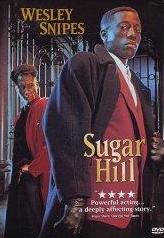
The film has great ambitions, but by 1994, all the gangster film cliches had been done to death (Wright’s character even goes so far as to name check GoodFellas right in the middle of the movie) and Sugar Hill borrows a little too liberally from many of them. The ending seems tacked on. In spite of all these factors, or maybe because of them, Snipes gives one of the best performances of his career. He works as Roemello Skuggs because his drug dealer is three dimensional: he is by turns, violent (in one scene, he head butts an arrogant African drug dealer so quickly, you feel like he head butted you), funny (in counteracting the tension between his brother and father -- a magnificent Clarence Williams III, as a more destructive version of Prince’s father from Purple Rain) and sweet (in his lush, romantic arc with the luminous Theresa Randle). We see the weight that he carries -- despite his always cool demeanor -- and that he wants to live a decent life, even if we know, somehow, that the odds are against his getting there. It is cliche to compare his performance in the recently released Brooklyn’s Finest to Nino Brown in New Jack City. But the former is actually closer to his turn as Roemello in Sugar Hill, with all its pathos and wanting to make up for lost time.
The action movies, even as his career ascended, became interchangeable (Boiling Point? U.S. Marshals?) but provided him with the opportunity to also act in low-budget, intimate projects (The Waterdance, One Night Stand). After taking 1996 off and a very humdrum 1997 (the highlight of which was his turn as a Barry Bonds-like player stalked by Robert DeNiro in The Fan), he became the first successful (grossing $150 million worldwide) black superhero in the sublime vampire action film, Blade.
JUST WHEN IT SEEMED like he couldn't be stopped, he was. The 1990s were drawing to a close and, just as he had ridden the tidal wave of the decade’s aggressiveness, conservative times were on the horizon. The trouble began in Ebony Magazine, of all places, where Snipes spoke of the appeal of his (then) Asian girlfriend within the context of angry black women of his past.
“I know we've all been hurt, and we’re all very wounded,” he said in November 1997. “We have to acknowledge that, both male and female, in the Black experience. We’re a wounded people... We don’t want to compromise. We feel like we’ve compromised enough. But in any relationship you have to compromise... And I say to Black women also, brothers who are very, very successful, or who have become somewhat successful, usually it’s been at a great expense, unseen by the camera’s eye.... I want to come home and I don’t want to argue. I want to be pleasing, but if I ask you to get me a glass of water, you’re going to say, ‘Them days is over.’ please. Come on... He doesn't want to come home to someone who’s going to be mean and aggravating and unkind and who is going to be ‘please me, please me.’.... So it’s very natural that he’s going to turn to some place that’s more compassionate.... You’ve worked hard and you deserve to come home to comforting.”
The fallout was swift and immediate. No African-American movie star has become such without the ardent support of black women. News of the quote spread and was discussed and internalized and personalized and misquoted and demonized. Wesley Snipes is arrogant. The fame’s went to his head. He thinks he’s too good for black women. That’s why he’s doing all this martial arts stuff, who this dude think he is, Bruce Lee? Was it true that he physically abused a famous black actress? Snipes threw a couple of well-intentioned alley oops to what was left of his black female fan base: he executive produced and co-starred in the little seen, Maya Angelou-directed gem Down in the Delta (which finally made good use of Alfre Woodard). Then he produced (and miscast himself) as the male lead in an HBO adaptation of Terry McMillan’s Disappearing Acts. But things were never the same.
The early 2000s were quiet, then turbulent. He remarried and had four more children. Aside form Blade’s sequel and (horrible) third installment, there wasn’t much going on. Then, in 2005, Snipes sued New Line Cinema in regards to the last Blade film, accusing them of withholding his salary, leaving him out of key casting decisions and cutting out his scenes in favor of his young, white co-stars.4 A year later, he was back in court, facing serious tax evasion charges that have continued to mar his name. In the meanwhile, his slide into the straight to DVD market began, a period where, as he recently told The Washington Post, “They were selling toasters, you know, and they just needed Wesley as the piece of bread.”5 Everyone had forgotten him. And another stylish, black action superstar slash thespian had become the biggest movie star in the world in his wake. Again, the same initials, but this guy's name was Will Smith.
In Brooklyn’s Finest, Snipes is well cast as a drug dealer fresh out of prison and looking to get his life back on track. Director Antoine Fuqua has said repeatedly that he cast Snipes because he thought his real life troubles might help mirror his character’s disorientation of being back on the block. Watching him onscreen, one is quickly reminded that it has been at least ten years since we’ve seen him and that those ten years couldn’t haven’t been easy. Acting alongside Don Cheadle, Snipes seems like the elder statesman, even though, in real life, they are just two years apart. Snipes’s movements are measured and when paired with the intense Cheadle, the contrast is startling. As an audience member, it is impossible for us to divorce his absence from our screens from the isolation his character, Cas, projects. It is the same reason why Mickey Rourke was so perfect in The Wrestler. It is ok for art to imitate life.


It is not yet clear if Brooklyn’s Finest is the kickoff to another outstanding decade of work for Wesley Snipes. I hope that it is. We need him -- and actors of his ilk -- desperately in this microwave age, where reality stars have longer television resumes than trained actors who have sacrificed to learn their craft. Robert Downey Jr., a two-time co-star of Snipes (in Murder at 1600 and One Night Stand) has found his way out of a far darker past and has emerged as an Oscar nominee and box office behemoth. The new decade is still undetermined, but it can be whatever we want it to be. And maybe he will never be the star he was, but he really doesn't have to be. To see him, still exciting and thrilling us, still defying the odds after all this time, on a platform worthy of his considerable charm and talent, is (for now at least) enough.
1 http://www.answers.com/topic/wesley-snipes
2 http://en.wikipedia.org/wiki/New_Jack_City
3 http://www.parade.com/celebrity/celebrity-parade/2010/03-01-wesley-snipes-brooklyns-finest.html
4 http://en.wikipedia.org/wiki/Wesley_Snipes#New_Line_lawsuit
5 http://www.washingtonpost.com/wp-dyn/content/article/2010/02/25/AR2010022505178.html
Monday, March 21, 2011
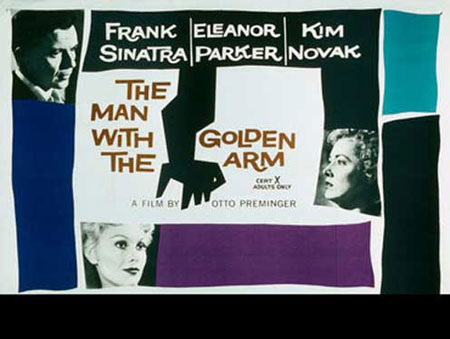
Saul Bass Appreciation

This guy had some of the most amazing title sequences & posters in film history. Complex pays respect.
Some of my faves:



Thursday, March 04, 2010
New blog coming soon
Stay tuned for new blog from me, coming soon.
This one will probably be deactivated.
Stay posted.
This one will probably be deactivated.
Stay posted.
Wednesday, October 14, 2009


Tuesday, April 22, 2008
discoveries and re:discoveries
What's up good people? What have I been up to? Just focusing on trying to get one of my scripts, Too Marvelous for Words, financed and filmed. I'm getting a budget breakdown and am about to approach an A-list casting director and cinematographer. There are some other things shuffling around with it as well, but I'm a little too superstitious to speak on them. I stopped working on my novel to do some prep on it (researching some potential crew people, doing a rewrite, speed reading through two outstanding books about production: What I Really Want to Do Is Produce by Helen de Winter and Shooting to Kill by Christine Vachon, cutting out tons of pictures to create a "look book" to convey visual ideas for the script) but hope to start back on the last chapter of the middle section next week.
And still watching movies. I just finished the best movie. It's my first Ozu film, Tokyo Story.


It had been recommended to me, indirectly, as something I might want to see for it's minimalistic visual style in relation to Too Marvelous, which I intend to shoot very simply. But Tokyo Story is a great movie. Me and the wife had, like, a 20-minute discussion after it. It's just real. It was shot very well, but what really got me was the story and how accurately it depicts the loneliness of getting old, of raising children who have forgotten you, of the disappointment often reciprocated between parents and their adult children. For it to be a 55 year old Japanese film, it dealt with some highly contemporary themes, ageless themes, in fact. I had heard Ozu was a beast before, but now I'm gonna have to get involved (c) Raphael Saadiq.
Some other recent discoveries (and rediscoveries) that I plan to implement: Kramer .vs Kramer's look, period. That film is so natural. I watched it again a couple weeks ago online via Netflix. Barry Lyndon's au naturale lighting was kind of gutsy for a period piece in retrospect and much up my alley for this project. I just watched Talk to Her yesterday (Habla con Ella por mi amigos espanol) and loved the way Almodovar found a way to make multiple hospital scenes each look interesting. (Yes, my script has multiple hospital scenes. But it does not, unfortunately, have Paz Vega.)

I'll be off work Thursday and Friday to make some calls and take care of some other, more practical business. I've bought some tickets lately, for two shows, that I'm amped about: Sly and the Family Stone in Anaheim on Friday night and the Prince .vs Michael Soulslam in Glendale w/ DJ Spinna on May 2.

You know I'll have the pics and stuff, either here or on MySpace. Just keeping you posted. Holla at your boy.
Musically: rediscovered Beck's Guero and The Information today, as well as Alice Russell's My Favourite Letters. And you need to kill for The Persuaders' "Sureshot."

HAPPY BIRTHDAY MAMA!!!!!!!!!!!
And still watching movies. I just finished the best movie. It's my first Ozu film, Tokyo Story.
It had been recommended to me, indirectly, as something I might want to see for it's minimalistic visual style in relation to Too Marvelous, which I intend to shoot very simply. But Tokyo Story is a great movie. Me and the wife had, like, a 20-minute discussion after it. It's just real. It was shot very well, but what really got me was the story and how accurately it depicts the loneliness of getting old, of raising children who have forgotten you, of the disappointment often reciprocated between parents and their adult children. For it to be a 55 year old Japanese film, it dealt with some highly contemporary themes, ageless themes, in fact. I had heard Ozu was a beast before, but now I'm gonna have to get involved (c) Raphael Saadiq.
Some other recent discoveries (and rediscoveries) that I plan to implement: Kramer .vs Kramer's look, period. That film is so natural. I watched it again a couple weeks ago online via Netflix. Barry Lyndon's au naturale lighting was kind of gutsy for a period piece in retrospect and much up my alley for this project. I just watched Talk to Her yesterday (Habla con Ella por mi amigos espanol) and loved the way Almodovar found a way to make multiple hospital scenes each look interesting. (Yes, my script has multiple hospital scenes. But it does not, unfortunately, have Paz Vega.)
I'll be off work Thursday and Friday to make some calls and take care of some other, more practical business. I've bought some tickets lately, for two shows, that I'm amped about: Sly and the Family Stone in Anaheim on Friday night and the Prince .vs Michael Soulslam in Glendale w/ DJ Spinna on May 2.
You know I'll have the pics and stuff, either here or on MySpace. Just keeping you posted. Holla at your boy.
Musically: rediscovered Beck's Guero and The Information today, as well as Alice Russell's My Favourite Letters. And you need to kill for The Persuaders' "Sureshot."
HAPPY BIRTHDAY MAMA!!!!!!!!!!!
Thursday, April 10, 2008
My interview with Charles Burnett

1988 MacArthur "Genius" Grant recipient Charles Burnett was born in 1944 and raised in Los Angeles. While a student at UCLA Film School, he directed the masterpiece Killer of Sheep (1977), which details a poor, black South Central L.A. man's emotional struggles in the face of his brutal day job. The film was later named one of the "100 Most Influential Films of All Time" by the National Society of Film Critics and was selected for preservation by the Library of Congress.
Despite the obstacles he faced promoting black stories that weren't deemed "commercial enough," more gems were produced: 1983's coming of age tale, My Brother's Wedding, 1990's ensemble piece To Sleep With Anger and 1994's cop drama The Glass Shield. He was honored by the Los Angeles Pan-African Film Festival this February, where he premiered his epic, Namibia: The Struggle for Liberation, starring Danny Glover. Despite his accolades and a fine body of work, he is far from a household name and faces struggles disproportionate to a filmmaker of his stature in getting his projects financed. Preparing for a trip to Toronto, Burnett chatted about his films, the mine fields of low-budget cinema and why you should never disturb a hippopotamus.
Jason Gilmore: Who were the film directors that inspired you growing up?
Charles Burnett: I was influenced by a lot of people. I suppose a lot of the early black and white films that Hollywood did. (Charlie) Chaplin and (Buster) Keaton and people like that. William Wellman. A lot of the great cameraman that directed.
JG: Jumping ahead a bit, could you talk about the climate at UCLA film school in the late 1960s and early 70s and how that affected your work?

CB: Well, it was great place to be. UCLA was very cheap at the time and it was very diverse in more ways than one. A lot more people of color were there. There were a number of people in the film department. [They] made an effort to bring in a number of Native Americans and Hispanics and Blacks. And Asians, to integrate the film department. It was part of a ethnic communication program that was started and I was one of the TAs in that program. One of the things on campus, when you saw a black person, it didn’t matter how far away they were -- if it was a shadow -- you’d wave and introduce yourself to show the solidarity. The other thing about UCLA that was really great was that you had a lot of working class people there. It was diverse in that sense. And UCLA, the equipment was there so you could go out and make your film. And everyone was really guarded about their projects in Project 1 because it was so competitive. So it caused tension in a good way. And then you learned from other students, you worked on their films and that was the best part about it, you know. You were always on campus, working at soundstage, around the location working. The faculty was great. They really were made up of people who were very open minded. You could argue with them about things, there wasn’t any set way. You could do what you wanted to do to make it work.
JG: That brings us to some of your earliest works like Several Friends (1969), The Horse (1973)and Killer of Sheep (1977). Where did the idea for Killer of Sheep come from?
CB: It came from working on some student films and they were doing films about the working class and the poor and that sort of thing and they were doing movies about shopping and management exploiting workers and workers forming a union and everything was happening. The people I knew were just happy to get jobs. There were all these other things that were impacting them. There wasn’t any kind of solution. So that’s where I came from.
JG: I really admire a lot of the neo-realism of your early work and I was wondering how much of Killer of Sheep was improvised.
CB: It wasn’t improvised. It was all scripted.
JG: Oh, wow. Okay.
CB: There were maybe one or two scenes in there, but 99% of it was scripted.
JG: That’s interesting. So as a director, how do you create -- because that film looked so natural, it looked like a documentary -- and I’m wondering how you can create natural moments like that without looking staged.

CB: Well, that’s one of your goals in making a film like that. You want to look like you just picked the camera up and shot. Documentary-like, but not a documentary. You didn’t want to impose your values on it and make it an obvious, plotted situation. It was supposed to look like a slice of life and form the narrative by the events you see and how they relate to one another.
JG: Right. And I heard that a lot of the actors in that film were locals who’d never acted before. Is that true?

CB: Some of them had dabbled in acting. Henry Gayle Sanders had worked on two films before. And he had the most experience. Charles Bracy, we grew up together and he worked on another film I did. Kaycee Moore who played Stan’s wife, was someone I met. She was going to an acting workshop in Hollywood. I knew that she had done some stage work but it was mostly like workshop performances. And another actor, the bald-headed guy that comes up that wanted Stan to rob for them, those guys were all friends of mine.
JG: What’s the challenge of working with established actors versus actors who are early in the process or brand new?

CB: It depends. You have to work with either one, to get the performance, that’s the main thing. It’s a matter of choosing the right people. A lot of it has to do with giving the person time, some people have talent and some don’t and you discover that right away. A lot of it has to do with you and their trust in you and their knowing specifically what you want. With more experienced actors, you can cut to the chase quicker and get to what you want. They come prepared and have a lot of ideas and things like that and a lot of tools in their repertoire, so to speak. Actors will take their time to mold into the character and sometimes it works and sometimes it doesn’t. But you need time to work with non-actors.
JG: A practical question: How did you get access to the sheep at that facility in Killer of Sheep?
CB: One of the interesting things is that, around that time, a lot of vegetarians were making films about slaughterhouses. When I tried to get permission to shoot at a slaughterhouse here, they had closed the doors to all filmmakers. And so I had to go way up to Santa Rosa {about 420 miles} and there was a privately owned slaughterhouse and the owner said that he’d be willing to help anyone that was trying to help themselves. He was very very generous and let me have run of the place as long as I didn’t stop the production.
JG: I’ve noticed how important music in your films. I wondered if you had a particular philosophy on how you’d like music to work within your films.
CB: It’s an added element, you know. It puts you in a creative mood and moment and helps you to reference things and give meaning. So it plays an important part.
JG: Was there a time when you thought you’d be accepted by the industry or did you kind of sense from the beginning that you’d have the independent career that you’ve had?
CB: I didn’t think I’d have any career at first. It was very difficult at the time that we were making films in the ’60s to even think about it. It seemed impossible. Unless you had a relative in the business. Even then, they wouldn’t let people of color make films. They wouldn’t let you be in a position of power, like a director or something like that. The venues just weren’t open.
JG: In 1990, you directed the film that first introduced me to your work and that was To Sleep With Anger. You had a real powerhouse cast with Danny Glover and Sheryl Lee Ralph and the great Mary Alice. I was just wondering if you did a lot of rehearsal for that film and if you are a big fan of rehearsal in general.

CB: One of the bad things about independent film is that you don’t get much time for rehearsal. You come to the set and you’ve had meetings, hopefully, to get everything done, worked out with the actors, either individually or as a group. Because on a low budget film, there’s no money for rehearsal. And even a meeting, you have to be careful how you word having a meeting because they could look at that as rehearsal too. It’s really weird. So you come to the set and you and the actors rehearse and block the scene and they go to makeup and you and the cameraman start filming the scene. And [the actors] come back and you rehearse it again and then you shoot.
JG: One thing that I just learned about you -- and I don’t know why I didn’t know this -- was that you write most of the films that you direct.
CB: A lot of them, I try to, yeah.
JG: Because I’m a writer-director also, so I’m really intrigued by what the original inspiration is for some of your stories. I was really wondering about To Sleep With Anger and where that story came from.
CB: It developed after trying to do a film that was based on a true story. We started working on this film that took place here and then [the production company] started wanting to change everything and make it more “commercial” or something, I don’t know. I said, “You can’t do it that way, it’s based on a true story.” And so we got into this big argument. So I said, let me do something that’s not based in reality. So I started on that and they started putting their hands in the pot again and wanted to make changes. I said, “Wait a minute, you’re taking the whole heart of the movie out.” They didn’t want the folklore stuff in it. They wanted the black middle class portion to be expanded. So we parted ways again. But it was actually a reaction against another film that I wanted to do. I thought since this is fiction, that whatever they do will be okay. But as soon as you started writing and bonding with the material, then they come in and want to screw up everything. The other part of it was that I wanted to do something with folklore and how important it is. How when I was coming up, it was part if a foundation that you grew up to really respect in life. Looking around, you find it’s gone. Without it, I think people are soulless. That’s why I wanted to do something that talked about that.
JG: Then, after that, you did the highly underrated The Glass Shield, which had an early performance from Ice Cube. Was that movie done for Miramax?
CB: No, it was done for CiBy2000. Miramax distributed it.
JG: Oh, okay. So did you have any interaction with the Weinstein Brothers?
CB: Only towards the end.
JG: When was that?
CB: When we finished the film and CiBy 2000 and they took it to them for distribution.
JG: I just finished a book about them. What was that like?

CB: It was interesting. They’re upfront. Harvey is like, if he disagrees, he disagrees. You’ll just leave and box it out. (laughs) And there’s no hard feelings after that. But that’s the way it is. But they’re very straightforward and I have to give him credit for that. They didn’t try to do anything underhanded.
JG: And you also directed some TV movies that I think people might have seen but they might not have known it was you. [a few highlights -- 1998’s Oprah Winfrey Presents: The Wedding with Halle Berry, 2000’s Finding Buck McHenry with Ossie Davis and Ruby Dee, a segment of the 2003 PBS documentary The Blues.] What are some of the challenges you faced in working in television versus film?
CB: I don’t think there’s a huge difference. Episodic television there’s a lot of challenges, once you develop the pilot, if you’re lucky to do that, the rest of it you’re just punching the clock. But in a drama, a movie of the week, it’s like doing a low budget film. It depends on who you have to work with. Who’s the producer and what are they like? And how respectful they are. Usually, you don’t have that much money, so you have to shoot quicker. There’s less chances for nuances, I think, because everything has to be explained from top to bottom.
JG: I’m really sorry that I missed Namibia: The Struggle for Liberation at the Pan African Film Festival. Let us know more about it for those who aren’t familiar with the film or your struggle to get it made.

CB: Well, it’s a story about the liberation movement of southwest Africa. Under the leadership of SWAPO, the South West African Peoples’ Organization, under Sam Nujoma who started leading this whole thing in the late 1950s. He went into exile and they sort of waged war in exile…. Germany colonized them and in 1905, they massacred over half the population. After World War I, the German control was taken over by the British. Then South Africa took control and decided to annex them and [made them a part] of the apartheid system. Then, they started to form organizations to rebel. And then finally, came the massacre that happened in the old location, there were shots that killed about 11 of them and that’s when [Nujoma and his supporters] went into exile. Finally, after years of war and attrition, South Africa finally gave up. But with the help of the Cubans. The Cubans came in and really were responsible for a lot of the militia moving out.

JG: Do you have a distributor for that film?
CB: No, not yet.
JG: What was it like shooting in Namibia? This is the first motion picture shot there, right?
CB: Right. Some places you still had wild animals running around. Elephants and stuff like that in the road. We lived in one part of Caprivi, right over by the Zambezi River, at the Caprivi Lodge. There were hippos over at the bottom of the bank and alligators. So when you came in at night, you looked around and when you got up in the morning, you looked around, because you didn’t want to walk into the hippos any time because they were very dangerous. They kill more people than anything. We were shooting in that area and there was an elephant water hose and we were right in the middle of the path to the water hose. Then we shot in Etosha, which is a place where lions and you name it were running around loose and that was interesting. The people were great to work with. It was a great experience because we were all over Namibia from the west coast from Swakopmund and Walvis Bay all the way to the East, which is bordering Botswana and Zambia.
JG: My final question is being a writer-director and a black writer-director, where I’ve been in Los Angeles for eight or nine years and been in meetings where they say, “Oh, we love your script but….” You know, whatever whatever. What are the things that keep you going and continue to encourage you?
CB: I wish I could tell you. It comes down to the individual. How much desire you have to do it. I sort of stay away from that question in answering it because I don’t know how much one can endure. You have to have some kind of support. If you have a family, it’s disastrous, you know, because you don’t work that often. You have kids going to college and stuff like that. I would tell someone they should get a part-time job or do something to support yourself. There’s so many people out of work and so many people who I know who’ve gone on to other things. I don’t know. I do it because I have this optimism that maybe I can do it again. And it gets harder and harder, you know. I haven’t worked since the Namibia film, it’s been a couple years. And you keep going out and hearing, “Oh, we love you” but I can’t get a film.
Saturday, March 01, 2008
The Landlord
I saw the most interesting movie last night.
AFI and The Skirball Center combined to host a series called Cinema Legacy, in which they invite renowned filmmakers to sit in on a screening and Q & A for a movie that has influenced them as a filmmaker. John Singleton was last night's guest and he screened The Landlord, which I had been trying to find for years.

It was the first film directed by Hal Ashby, a seriously slept on Hollywood legend who went on to direct some of the most critically acclaimed films of the 70s (including The Last Detail, Being There and one of my all-time favs, Shampoo). It deals with Elgar, a spoiled 29-year-old rich kid (Beau Bridges) who decides to buy a beat up tenement in Park Slope, Brooklyn. His plans are to kick out the poor black residents and turn the place into a big old bachelor pad. But he is affected by the various residents there and falls for both the troubled but soulful Fanny (played by the sexy, late, great Diana Sands) and the mixed go-go dancer Lanie (the unbelievably beautiful Marki Bey), in addition to falling out with his snobby but liberal family, who are confused by his increasing empathy towards Negroes.
I don't even know where to start. It is clearly a film made by an editor (Ashby was one of the best in Hollywood before getting this break through his director Norman Jewison.) as it is full of Godard-like jump cuts and abstract images. Characters talk to the screen at times and several montages, as Singleton pointed out, are reminiscent of Do The Right Thing. The score, by Al Kooper (just after his ouster from Blood, Sweat & Tears) with help from The Staple Singers is stunning; it has reintroduced the option of finding a talented but versatile popular artist to score certain films of mine. The cinematography by Gordon Willis (prior to his similarly themed work in the Godfather films and Annie Hall) is luminous. (The no-nudity sex scene between Bridges and Bey and the scene where where Bridges and Bey walk back to her place after meeting are particularly beautiful.) Despite the film's occasional revelations that it was hella low budget (there are actually two scenes where one can see boom mics), it is as an honest a treatment of race relations -- as well as a phenomenal document of the general sociological chaos of the early 1970s -- as I have ever seen on film.
I got a chance to holla at John Singleton real quick after the Q&A, which was moderated by Ayuko Babu, founder of the Pan African Film Festival (which I recently volunteered for). People were all around, so I didn't get to say much, except to slip him my card and request to interview him for Intrepid Media. We'll see what happens. But it was an honor to meet him and a lot of the comments he made about remaining true to yourself as an artist really hit home. On that note, I wanted to thank those who reached out to me after my last entry. I'm not going anywhere. I was just sick and had too much time to think.
We're moving into pre-production on the Parkside Boulevard short. So you'll be getting the blow by blow on that soon. And the work on Somewhere Between Here and There is coming along nicely. I actually plan to spend the rest of the day typing up my changes for Chapter 5 and continuing my rewrite for Chapter 4. Wifey's shooting a pilot for BET as we speak. So life is well.
AFI and The Skirball Center combined to host a series called Cinema Legacy, in which they invite renowned filmmakers to sit in on a screening and Q & A for a movie that has influenced them as a filmmaker. John Singleton was last night's guest and he screened The Landlord, which I had been trying to find for years.
It was the first film directed by Hal Ashby, a seriously slept on Hollywood legend who went on to direct some of the most critically acclaimed films of the 70s (including The Last Detail, Being There and one of my all-time favs, Shampoo). It deals with Elgar, a spoiled 29-year-old rich kid (Beau Bridges) who decides to buy a beat up tenement in Park Slope, Brooklyn. His plans are to kick out the poor black residents and turn the place into a big old bachelor pad. But he is affected by the various residents there and falls for both the troubled but soulful Fanny (played by the sexy, late, great Diana Sands) and the mixed go-go dancer Lanie (the unbelievably beautiful Marki Bey), in addition to falling out with his snobby but liberal family, who are confused by his increasing empathy towards Negroes.
I don't even know where to start. It is clearly a film made by an editor (Ashby was one of the best in Hollywood before getting this break through his director Norman Jewison.) as it is full of Godard-like jump cuts and abstract images. Characters talk to the screen at times and several montages, as Singleton pointed out, are reminiscent of Do The Right Thing. The score, by Al Kooper (just after his ouster from Blood, Sweat & Tears) with help from The Staple Singers is stunning; it has reintroduced the option of finding a talented but versatile popular artist to score certain films of mine. The cinematography by Gordon Willis (prior to his similarly themed work in the Godfather films and Annie Hall) is luminous. (The no-nudity sex scene between Bridges and Bey and the scene where where Bridges and Bey walk back to her place after meeting are particularly beautiful.) Despite the film's occasional revelations that it was hella low budget (there are actually two scenes where one can see boom mics), it is as an honest a treatment of race relations -- as well as a phenomenal document of the general sociological chaos of the early 1970s -- as I have ever seen on film.
I got a chance to holla at John Singleton real quick after the Q&A, which was moderated by Ayuko Babu, founder of the Pan African Film Festival (which I recently volunteered for). People were all around, so I didn't get to say much, except to slip him my card and request to interview him for Intrepid Media. We'll see what happens. But it was an honor to meet him and a lot of the comments he made about remaining true to yourself as an artist really hit home. On that note, I wanted to thank those who reached out to me after my last entry. I'm not going anywhere. I was just sick and had too much time to think.
We're moving into pre-production on the Parkside Boulevard short. So you'll be getting the blow by blow on that soon. And the work on Somewhere Between Here and There is coming along nicely. I actually plan to spend the rest of the day typing up my changes for Chapter 5 and continuing my rewrite for Chapter 4. Wifey's shooting a pilot for BET as we speak. So life is well.
Tuesday, January 22, 2008
The beginning of the end
"The doors was closed/I felt like Bad Boy's street team/I couldn't work the Lox." -- Kanye West, "Touch the Sky"
So it's been an interesting last few days in my life. I got the flu for the first time on Friday and was in bed for a couple of days with a 101 degree fever. It broke sometime mid-Saturday and I've progressively felt better ever since. It was good to be off King Day and I took off today just to continue to build strength.
But it gave me a lot of time to think about my present and my future. Lord willing, I'll be 31 years old next month, and I've gotten to an age where I can't keep working at a day job that takes so much of my time (and energy and gas money) and keep writing and fighting to be an artist for the other four hours of the day. I think my body is showing me, dude, you're stressed and you can't keep just working all day and watching TV/writing/reading all night and just hoping that something you write will magically rescue you from this grind. (Especially at the lightning quick rate that people reject and dismiss every single thing I send out.) Yeah, yeah, yeah, it's a number's game and the cream eventually rise to the top, blah blah blah. But I'm almost 10 years in the game and I've got the same won-lost record as the untalented writers. And I'm not untalented.
What I am is aging. So now I'm trying to figure out what else I want to do with my life. I'm even talking with the wife about going to grad school and being a graduate assistant basketball coach. Because coaching basketball is the only other thing I could see myself doing that I wouldn't feel like I'd been wasting my time. Then, I was thinking maybe I just need to learn a trade. Like I should become an electrician or something. And write on the side. That way, if I never find a way to conquer the relentless apathy with which my work seems to leave editors and agents, at least I'll be getting paid handsomely for doing very little work, and can do that very little work as infrequently as I like.
So I'm giving myself two years. I still have to finish my rewrite of my novel (should be done by summer). Still have to finish my short script for Parkside Boulevard and film the pilot. Have a few other things I had planned to do this year. And then, for the first time in a long time, I'll be working on some new short stories/screenplays, etc, probably this summer, and we'll see where they go.
But my optimism is fading. I thought it was my creativity that was leaving me, but it turns out, it's just my optimism. (And if the perpetual optimist himself is doubting his place in the world, you should look for shelter too, my friend.) The writers' strike hasn't helped things either. It made me think about how shook I would be if I was on the other side of the fence and already successful, and now stood to lose my house, cars, kids' college tuition, all because of something completely beyond my control. That would suck too. So either way, it's a tough tough nut to crack and I just don't know if I want to deal with being so unreasonably obscure a writer for an indefinite period of time.
Or maybe it's just time to change jobs.
On a happier note, the wife and I went out to see a sneak preview of Michel Gondry's new film, Be Kind Rewind.
It inspired me tremendously, despite my current gloom and doom attitude. I feel weird going into details about movies that I saw for free at a sneak preview, but I can definitely say GO SEE IT!!! Jack Black, Mos Def, Danny Glover star, as well as Melonie Diaz, whom I liked very much in A Guide to Recognizing Your Saints. Mia Farrow and Sigourney Weaver appear in smaller, important roles. The plot, like all of Gondry's movies, is strange: Mos works at Danny Glover's decrepit, barely in business, VHS rental store. Jack Black is this extra weird cat that hangs around a lot and seems far more trouble than he's worth. Jack gets electrocuted and unintentionally demagnetizes all the store's tapes. The few customers are disgruntled and complain, so Mos, Jack and Melonie (whom they borrow from a local dry cleaners) go Fat Albert-style and use whatever borrowed or stolen props, people, or locations they can to reenact 20 minute versions of each movie for the rental customers. The improbable solution takes off and the store begins to see unprecedented business. Then, the copyright infringement folks show up with their fines and threats of jail time.
The movie starts slow, and Jack Black's electrocution scene is LONG -- past all plausibility -- but those are almost finicky complaints for a film that does such a brilliant job of capturing hope and community and the power of cinema. The entire cast shines. Really, go see it. I love Gondry for the same reason I love Pharrell, because they have somehow found a way to remain 12 years old, in a world that humans seem to age in dog years every day.
As for me, I will continue to do what I can. Until I can do no more.
And then I'll be gone.
So it's been an interesting last few days in my life. I got the flu for the first time on Friday and was in bed for a couple of days with a 101 degree fever. It broke sometime mid-Saturday and I've progressively felt better ever since. It was good to be off King Day and I took off today just to continue to build strength.
But it gave me a lot of time to think about my present and my future. Lord willing, I'll be 31 years old next month, and I've gotten to an age where I can't keep working at a day job that takes so much of my time (and energy and gas money) and keep writing and fighting to be an artist for the other four hours of the day. I think my body is showing me, dude, you're stressed and you can't keep just working all day and watching TV/writing/reading all night and just hoping that something you write will magically rescue you from this grind. (Especially at the lightning quick rate that people reject and dismiss every single thing I send out.) Yeah, yeah, yeah, it's a number's game and the cream eventually rise to the top, blah blah blah. But I'm almost 10 years in the game and I've got the same won-lost record as the untalented writers. And I'm not untalented.
What I am is aging. So now I'm trying to figure out what else I want to do with my life. I'm even talking with the wife about going to grad school and being a graduate assistant basketball coach. Because coaching basketball is the only other thing I could see myself doing that I wouldn't feel like I'd been wasting my time. Then, I was thinking maybe I just need to learn a trade. Like I should become an electrician or something. And write on the side. That way, if I never find a way to conquer the relentless apathy with which my work seems to leave editors and agents, at least I'll be getting paid handsomely for doing very little work, and can do that very little work as infrequently as I like.
So I'm giving myself two years. I still have to finish my rewrite of my novel (should be done by summer). Still have to finish my short script for Parkside Boulevard and film the pilot. Have a few other things I had planned to do this year. And then, for the first time in a long time, I'll be working on some new short stories/screenplays, etc, probably this summer, and we'll see where they go.
But my optimism is fading. I thought it was my creativity that was leaving me, but it turns out, it's just my optimism. (And if the perpetual optimist himself is doubting his place in the world, you should look for shelter too, my friend.) The writers' strike hasn't helped things either. It made me think about how shook I would be if I was on the other side of the fence and already successful, and now stood to lose my house, cars, kids' college tuition, all because of something completely beyond my control. That would suck too. So either way, it's a tough tough nut to crack and I just don't know if I want to deal with being so unreasonably obscure a writer for an indefinite period of time.
Or maybe it's just time to change jobs.
On a happier note, the wife and I went out to see a sneak preview of Michel Gondry's new film, Be Kind Rewind.
It inspired me tremendously, despite my current gloom and doom attitude. I feel weird going into details about movies that I saw for free at a sneak preview, but I can definitely say GO SEE IT!!! Jack Black, Mos Def, Danny Glover star, as well as Melonie Diaz, whom I liked very much in A Guide to Recognizing Your Saints. Mia Farrow and Sigourney Weaver appear in smaller, important roles. The plot, like all of Gondry's movies, is strange: Mos works at Danny Glover's decrepit, barely in business, VHS rental store. Jack Black is this extra weird cat that hangs around a lot and seems far more trouble than he's worth. Jack gets electrocuted and unintentionally demagnetizes all the store's tapes. The few customers are disgruntled and complain, so Mos, Jack and Melonie (whom they borrow from a local dry cleaners) go Fat Albert-style and use whatever borrowed or stolen props, people, or locations they can to reenact 20 minute versions of each movie for the rental customers. The improbable solution takes off and the store begins to see unprecedented business. Then, the copyright infringement folks show up with their fines and threats of jail time.
The movie starts slow, and Jack Black's electrocution scene is LONG -- past all plausibility -- but those are almost finicky complaints for a film that does such a brilliant job of capturing hope and community and the power of cinema. The entire cast shines. Really, go see it. I love Gondry for the same reason I love Pharrell, because they have somehow found a way to remain 12 years old, in a world that humans seem to age in dog years every day.
As for me, I will continue to do what I can. Until I can do no more.
And then I'll be gone.
Sunday, December 23, 2007
the ten albums that changed my life
ripped from my article at Intrepid Media
10. Rio (Duran Duran, released 5/10/83)
Was Duran Duran the best male pop band of the 1980s? Probably not. But they were the best looking, their videos were the most adventurous and they had the catchiest songs -- even if none of them made any sense. I have just described everything that mattered in the '80s. The three-headed Taylor crew (drummer Roger, guitarists Andy and John), androgynous synth wiz Nick Rhodes, and charismatic front man Simon LeBon were focused and ready to take over the world. This album launched their superstardom and is the solitary reason why everytime I find myself sitting at the front of a boat, I feel compelled to yell, "HER NAME IS RIO AND SHE DANCES ON THE SAND!" Seriously.
Songs you should know: Rio, Hungry Like the Wolf, Save A Prayer
9. Raising Hell (Run-DMC, rel. 7/18/86)
Sometimes it's best to have your back placed firmly against the wall. After two pretty successful albums, childhood friends Joseph "Run" Simmons and Darryl "DMC" McDaniels had reached a pivotal crossroad: commercialize their music by merging further with rock, or stay true to the hip-hop culture of the streets of New York. What resulted was enough of both to make everyone happy, and arguably the most important album in rap history. They singlehandedly made a conservative MTV (yeah, I know) open the doors to rap music and set a bar for cohesion that even they couldn't live up to. There is nothing on this album to add or subtract. It is, as one of the songs on the album states, perfection. RIP Jam Master Jay.
Songs you should know: Walk This Way, My Adidas, Peter Piper
8. It Takes A Nation of Millions to Hold Us Back (Public Enemy, rel. 4/19/88)
You will never understand how much I needed this album. The Bomb Squad's production, layered with multiple samples per song in the days before you had to pay for them, was fiery, relentless and unprecedented. ("Rebel Without A Pause" is the dopest beat ever made, period.) Chuck D wasn't even the best rapper on his own label (scroll down to album #5), but his threats felt like promises and his arguments were indisputable. And long before he became better known as the buffoonish headliner of several VH-1 dating reality shows, Flavor Flav was the buffoonish sidekick to the most influential rap group of its' time. But Flav never changed, the times changed. Without his mercurial court jester, the whole thing would've never worked.
Songs you should know: Don't Believe the Hype, Bring the Noise, Night of the Living Bassheads
7. Abbey Road (The Beatles, rel. 9/26/69)
The last Beatles album recorded (though not the last released), the bickering Fab Four had agreed to play nice long enough to end on a positive note. This is their funkiest album and also their most sublime. Abbey Road is the CD I play for my Beatle-hating friends without telling them who it is. Inexplicably, after nodding their head in agreement for minutes, they will ask who's playing, at which point, I will smack them over the head with a picture of Paul McCartney and storm out of the room. "Because" has some of their best harmonies ever. "You Never Give Me Your Money" is just amazing. I liked "Something" enough to put it on my wedding favor mix CD. And I liked the album enough to parody its famous cover on our wedding CD's cover.
Songs you should know: Come Together, Something, Here Comes the Sun
6. Purple Rain (Prince & the Revolution, rel. 6/25/84)
Despite my constant, romanticized comments about the greatness of the 1970s, so far we are seeing where my heart really lies. We will never see the likes of Mr. Prince Rogers Nelson again: part Hendrix, part James Brown, part Dylan, part Sly Stone, and still somehow completely, unabashedly original. I was more a Michael kid than a Prince kid, but the power of this soundtrack (and the accompaying movie, which still moves me despite its glaring flaws) was undeniable. The seamless blend of rock, soul, power ballads and synthesizers was mind blowing then, as it is still is today.
Songs you should know: Let's Go Crazy, Purple Rain, When Doves Cry
5. Bigger and Deffer (LL Cool J, rel. 7/1/87)
"I don't run from the cops/Makin' suckers jock/And I'm only 18/Makin' more than your pops."
Like OutKast's ATLiens, this was the risky sophomore album that could've killed his career. But the gamble paid off and it paid off so violently, that 19-year-old James Todd Smith became the reason I wrote my first rap. I've heard quotes from Bob Dylan fans who say that his songs were clues on how to live your life. Yeah, that's pretty much what happened to me with Bigger and Deffer.
On the very first song, "I'm Bad", his confidence is so adamant, it's infectious. What other song begins with "No rapper can rap quite like I can/I'll take a musclebound man and put his face in the sand?" He delivers well-written, imaginative tale after the other: the all-purpose girlfriend of our dreams in "Kanday," the ins and outs of a run-down local haunt ("The Bristol Hotel"), a vain but witty day-in-the-life excerpt ("The Do Wop"). We all know that rap and testosterone are nearly inseparable. But on track 9, he did the unthinkable. He made a soft rap love song (the legendary "I Need Love") with such gravity that even the haters had to sing along. It was a difficult balance. Go back and listen to Big Daddy Kane's attempts to cover similar ground. They sounded ridiculous, even back then, and precipitated his demise. LL's wild brashness made you want to reach the moon as well. Still does, in fact, 20 years later.
Songs you should know: I'm Bad, I Need Love, Go Cut Creator Go
4. Off the Wall (Michael Jackson, rel. 8/10/79)
It seems funny to say it now, but his career was thought to be dead. Even more dead that it appears to be at the moment, with his face all chopped and bleached, with child molestation charges as plentiful as the Los Angeles air has smog. He was going to be another Leif Garrett, probably, or Shaun Cassidy, a footnote. Whatever happened to whats his name from the Jackson 5? The critical and financial failure of The Wiz -- in which he'd appeared the year before as the Scarecrow -- didn't help. Enter Quincy Jones, the disco era, and one pissed off 20-year-old Virgo. What results is a masterpiece. Dude had Stevie, McCartney and David Foster writing songs for him. It is impossible to leave this album in a bad mood.
Songs you should know: Rock With You, Don't Stop 'Till You Get Enough, I Can't Help It
3. Midnight Marauders (A Tribe Called Quest, rel. 11/9/93)
Things I remember as clearly as I remember anything: The day I bought the cassette. The first time I heard it in its entirety. Tripping off the bass kicks on "We Can Get Down." Buying it on CD a few months later. Listening to "Electric Relaxation" for hours at a time. Staring at the cover for days, trying to name every rapper featured. The first time I saw the video for "Award Tour." Arguing with some crazy girl over the dilemma posed in "Sucka Nigga." Hoping that one day I'd grow up to be as cool as Q-Tip. Digging through my parents' vinyl, trying to find the original samples. Spending a late night out with my boy Shawn that was eerily similar to the scenario described in "Midnight." Being amazed at the effortless chemistry between Tip and scrappy co-star Phife Dawg. Many people prefer their previous album, The Low End Theory, but to me, it's no contest. Marauders is more assured, hits harder, and, along with The Chronic, is possibly the most universally respected rap production made in the last twenty years. It gave me permission to be me.
Songs you should know: Award Tour, Electric Relaxation, Oh My God
2. Thriller (Michael Jackson, rel. 12/1/82)
This is like describing the merits of oxygen. I know my limitations.
Songs you should know: Thriller, Beat It, Billie Jean
1. Talking Book (Stevie Wonder, rel. 10/27/72)
C'mon, now. How did you not know that Stevie Wonder would find his way to the top of this list? This is the only album that I own on cassette, vinyl, and CD, as well as the internet. I discovered it sometime in high school and it seems to follow me wherever I go. I directed one of my own plays as a freshman in college and closed it with "Blame It on the Sun." Made it through a disappointing relationship thanks to "Looking for Another Pure Love." (Jeff Beck's guitar solo here is one of the most beautiful things I've ever heard in my life.) Wooed my wife with "You Are the Sunshine of My Life." And I refuse to die until I learn how to play "You and I (We Can Conquer the World)" on piano.
Over Thriller, you say? Better than the album you compared to oxygen, you say? Well, Thriller makes me appreciate greatness, but Talking Book makes me want to do something great. It, like many of the works listed here, was the work of someone who finally burst through after knocking on the door so long. And that encourages me. Because I'm still knocking.
Songs you should know: You Are the Sunshine of My Life, Superstition, I Believe (When I Fall In Love It Will Be Forever)
The next 10 (for those who care): ATLiens, OutKast; The Beatles (The White Album), The Beatles; Late Registration, Kanye West; Licensed to Ill, The Beastie Boys; The Miseducation of Lauryn Hill, Lauryn Hill; New Edition, New Edition; Only Built 4 Cuban Linx, Raekwon the Chef; Pisces, Aquarius, Capricorn & Jones Ltd., The Monkees; The Revival, Tony! Toni! Tone; Speakerboxx/The Love Below, OutKast.
10. Rio (Duran Duran, released 5/10/83)
Was Duran Duran the best male pop band of the 1980s? Probably not. But they were the best looking, their videos were the most adventurous and they had the catchiest songs -- even if none of them made any sense. I have just described everything that mattered in the '80s. The three-headed Taylor crew (drummer Roger, guitarists Andy and John), androgynous synth wiz Nick Rhodes, and charismatic front man Simon LeBon were focused and ready to take over the world. This album launched their superstardom and is the solitary reason why everytime I find myself sitting at the front of a boat, I feel compelled to yell, "HER NAME IS RIO AND SHE DANCES ON THE SAND!" Seriously.
Songs you should know: Rio, Hungry Like the Wolf, Save A Prayer
9. Raising Hell (Run-DMC, rel. 7/18/86)
Sometimes it's best to have your back placed firmly against the wall. After two pretty successful albums, childhood friends Joseph "Run" Simmons and Darryl "DMC" McDaniels had reached a pivotal crossroad: commercialize their music by merging further with rock, or stay true to the hip-hop culture of the streets of New York. What resulted was enough of both to make everyone happy, and arguably the most important album in rap history. They singlehandedly made a conservative MTV (yeah, I know) open the doors to rap music and set a bar for cohesion that even they couldn't live up to. There is nothing on this album to add or subtract. It is, as one of the songs on the album states, perfection. RIP Jam Master Jay.
Songs you should know: Walk This Way, My Adidas, Peter Piper
8. It Takes A Nation of Millions to Hold Us Back (Public Enemy, rel. 4/19/88)
You will never understand how much I needed this album. The Bomb Squad's production, layered with multiple samples per song in the days before you had to pay for them, was fiery, relentless and unprecedented. ("Rebel Without A Pause" is the dopest beat ever made, period.) Chuck D wasn't even the best rapper on his own label (scroll down to album #5), but his threats felt like promises and his arguments were indisputable. And long before he became better known as the buffoonish headliner of several VH-1 dating reality shows, Flavor Flav was the buffoonish sidekick to the most influential rap group of its' time. But Flav never changed, the times changed. Without his mercurial court jester, the whole thing would've never worked.
Songs you should know: Don't Believe the Hype, Bring the Noise, Night of the Living Bassheads
7. Abbey Road (The Beatles, rel. 9/26/69)
The last Beatles album recorded (though not the last released), the bickering Fab Four had agreed to play nice long enough to end on a positive note. This is their funkiest album and also their most sublime. Abbey Road is the CD I play for my Beatle-hating friends without telling them who it is. Inexplicably, after nodding their head in agreement for minutes, they will ask who's playing, at which point, I will smack them over the head with a picture of Paul McCartney and storm out of the room. "Because" has some of their best harmonies ever. "You Never Give Me Your Money" is just amazing. I liked "Something" enough to put it on my wedding favor mix CD. And I liked the album enough to parody its famous cover on our wedding CD's cover.
Songs you should know: Come Together, Something, Here Comes the Sun
6. Purple Rain (Prince & the Revolution, rel. 6/25/84)
Despite my constant, romanticized comments about the greatness of the 1970s, so far we are seeing where my heart really lies. We will never see the likes of Mr. Prince Rogers Nelson again: part Hendrix, part James Brown, part Dylan, part Sly Stone, and still somehow completely, unabashedly original. I was more a Michael kid than a Prince kid, but the power of this soundtrack (and the accompaying movie, which still moves me despite its glaring flaws) was undeniable. The seamless blend of rock, soul, power ballads and synthesizers was mind blowing then, as it is still is today.
Songs you should know: Let's Go Crazy, Purple Rain, When Doves Cry
5. Bigger and Deffer (LL Cool J, rel. 7/1/87)
"I don't run from the cops/Makin' suckers jock/And I'm only 18/Makin' more than your pops."
Like OutKast's ATLiens, this was the risky sophomore album that could've killed his career. But the gamble paid off and it paid off so violently, that 19-year-old James Todd Smith became the reason I wrote my first rap. I've heard quotes from Bob Dylan fans who say that his songs were clues on how to live your life. Yeah, that's pretty much what happened to me with Bigger and Deffer.
On the very first song, "I'm Bad", his confidence is so adamant, it's infectious. What other song begins with "No rapper can rap quite like I can/I'll take a musclebound man and put his face in the sand?" He delivers well-written, imaginative tale after the other: the all-purpose girlfriend of our dreams in "Kanday," the ins and outs of a run-down local haunt ("The Bristol Hotel"), a vain but witty day-in-the-life excerpt ("The Do Wop"). We all know that rap and testosterone are nearly inseparable. But on track 9, he did the unthinkable. He made a soft rap love song (the legendary "I Need Love") with such gravity that even the haters had to sing along. It was a difficult balance. Go back and listen to Big Daddy Kane's attempts to cover similar ground. They sounded ridiculous, even back then, and precipitated his demise. LL's wild brashness made you want to reach the moon as well. Still does, in fact, 20 years later.
Songs you should know: I'm Bad, I Need Love, Go Cut Creator Go
4. Off the Wall (Michael Jackson, rel. 8/10/79)
It seems funny to say it now, but his career was thought to be dead. Even more dead that it appears to be at the moment, with his face all chopped and bleached, with child molestation charges as plentiful as the Los Angeles air has smog. He was going to be another Leif Garrett, probably, or Shaun Cassidy, a footnote. Whatever happened to whats his name from the Jackson 5? The critical and financial failure of The Wiz -- in which he'd appeared the year before as the Scarecrow -- didn't help. Enter Quincy Jones, the disco era, and one pissed off 20-year-old Virgo. What results is a masterpiece. Dude had Stevie, McCartney and David Foster writing songs for him. It is impossible to leave this album in a bad mood.
Songs you should know: Rock With You, Don't Stop 'Till You Get Enough, I Can't Help It
3. Midnight Marauders (A Tribe Called Quest, rel. 11/9/93)
Things I remember as clearly as I remember anything: The day I bought the cassette. The first time I heard it in its entirety. Tripping off the bass kicks on "We Can Get Down." Buying it on CD a few months later. Listening to "Electric Relaxation" for hours at a time. Staring at the cover for days, trying to name every rapper featured. The first time I saw the video for "Award Tour." Arguing with some crazy girl over the dilemma posed in "Sucka Nigga." Hoping that one day I'd grow up to be as cool as Q-Tip. Digging through my parents' vinyl, trying to find the original samples. Spending a late night out with my boy Shawn that was eerily similar to the scenario described in "Midnight." Being amazed at the effortless chemistry between Tip and scrappy co-star Phife Dawg. Many people prefer their previous album, The Low End Theory, but to me, it's no contest. Marauders is more assured, hits harder, and, along with The Chronic, is possibly the most universally respected rap production made in the last twenty years. It gave me permission to be me.
Songs you should know: Award Tour, Electric Relaxation, Oh My God
2. Thriller (Michael Jackson, rel. 12/1/82)
This is like describing the merits of oxygen. I know my limitations.
Songs you should know: Thriller, Beat It, Billie Jean
1. Talking Book (Stevie Wonder, rel. 10/27/72)
C'mon, now. How did you not know that Stevie Wonder would find his way to the top of this list? This is the only album that I own on cassette, vinyl, and CD, as well as the internet. I discovered it sometime in high school and it seems to follow me wherever I go. I directed one of my own plays as a freshman in college and closed it with "Blame It on the Sun." Made it through a disappointing relationship thanks to "Looking for Another Pure Love." (Jeff Beck's guitar solo here is one of the most beautiful things I've ever heard in my life.) Wooed my wife with "You Are the Sunshine of My Life." And I refuse to die until I learn how to play "You and I (We Can Conquer the World)" on piano.
Over Thriller, you say? Better than the album you compared to oxygen, you say? Well, Thriller makes me appreciate greatness, but Talking Book makes me want to do something great. It, like many of the works listed here, was the work of someone who finally burst through after knocking on the door so long. And that encourages me. Because I'm still knocking.
Songs you should know: You Are the Sunshine of My Life, Superstition, I Believe (When I Fall In Love It Will Be Forever)
The next 10 (for those who care): ATLiens, OutKast; The Beatles (The White Album), The Beatles; Late Registration, Kanye West; Licensed to Ill, The Beastie Boys; The Miseducation of Lauryn Hill, Lauryn Hill; New Edition, New Edition; Only Built 4 Cuban Linx, Raekwon the Chef; Pisces, Aquarius, Capricorn & Jones Ltd., The Monkees; The Revival, Tony! Toni! Tone; Speakerboxx/The Love Below, OutKast.
Wednesday, December 19, 2007
oh, what a night (c) Missy
Last night was bananas.
The home team went out on the town to check out Cornel West and Tavis Smiley in Hollywood. The former was promoting his spoken word CD, Never Forget: A Journey of Revelations. It was a crowded but laid back club vibe, DJ Rashida killed the ones and twos. They played four tracks from the CD and Cornel West commented on each of them, some of his comments turned into mini-dissertations. The knowledge given out was totally appreciated and validated a lot of what I had been thinking.
Then, afterwards, I met David Ritz, author of a host of well-known black music biographies (most notably the one they used for the Ray Charles biopic, and of course, the book I've been obsessing over since high school: Divided Soul -- The Life of Marvin Gaye. I met Levar Burton, which was a trip because I was named after him. Those pics are on the MySpace page. Moms was a big fan of Roots when she was carrying your boy. Hence my middle name. I had an extra cool exchange with Anthony Mackie. Then, came this.


The zoom is ridic on the last one, fa sho, but it was kinda crowded getting to Dr. West and wifey did the best she could. Then, we sat and danced to the 80s and 90s jams and watched some of our hype peers do the Kid N' Play, the wop and the Roger Rabbit. (Amongst other classic moments.)
AND MY PISTONS JUST BEAT THE CELTICS IN BOSTON!!!! Just left a message regarding the game on Michael Bivins's MySpace page. We gangsta like that. They want to come up w/ some new East darlings every year. But we're the dudes. Just face it.
I'm going to have a podcast soon. Probably after the New Year. More details to come. I have the name and the basic concept. But I'll let you know the full, when I have the full.
The home team went out on the town to check out Cornel West and Tavis Smiley in Hollywood. The former was promoting his spoken word CD, Never Forget: A Journey of Revelations. It was a crowded but laid back club vibe, DJ Rashida killed the ones and twos. They played four tracks from the CD and Cornel West commented on each of them, some of his comments turned into mini-dissertations. The knowledge given out was totally appreciated and validated a lot of what I had been thinking.
Then, afterwards, I met David Ritz, author of a host of well-known black music biographies (most notably the one they used for the Ray Charles biopic, and of course, the book I've been obsessing over since high school: Divided Soul -- The Life of Marvin Gaye. I met Levar Burton, which was a trip because I was named after him. Those pics are on the MySpace page. Moms was a big fan of Roots when she was carrying your boy. Hence my middle name. I had an extra cool exchange with Anthony Mackie. Then, came this.


The zoom is ridic on the last one, fa sho, but it was kinda crowded getting to Dr. West and wifey did the best she could. Then, we sat and danced to the 80s and 90s jams and watched some of our hype peers do the Kid N' Play, the wop and the Roger Rabbit. (Amongst other classic moments.)
AND MY PISTONS JUST BEAT THE CELTICS IN BOSTON!!!! Just left a message regarding the game on Michael Bivins's MySpace page. We gangsta like that. They want to come up w/ some new East darlings every year. But we're the dudes. Just face it.
I'm going to have a podcast soon. Probably after the New Year. More details to come. I have the name and the basic concept. But I'll let you know the full, when I have the full.
Subscribe to:
Posts (Atom)