I originally wrote this around the time Brooklyn's Finest came out. Wesley Snipes saw it and even though he never commented on it, he began following me on Twitter shortly thereafter. Then I pulled it because I hoped to have it published in a prominent film journal that shall remain nameless. But they gave me crickets, so I'm bringing it back. Hope you likes. And, yes I will say it - Free Wesley Snipes.
The Man Who Would Be King
Jason Gilmore on Wesley Snipes

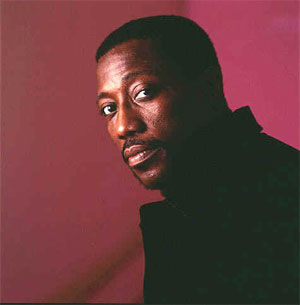
To talk about Wesley Snipes in a historical context, you almost have to reach back to Woody Strode - the former pro athlete turned actor -- to get such a raw mixture of athleticism, stage presence and charisma, clustered in a dark-skinned, high-cheekboned package, that, while not conventionally handsome, has sent more than their fair share of female hearts swooning. The two men have the same initials, sure, and were born six days apart, but Woody came of age at a time when comedic roles or dancing roles would've meant playing the buffoon. As a result, he was unable to show his range as an actor until well into his 50s. And he never had the opportunity to become a major star.
This is an important distinction. Let's be clear: Denzel Washington took the Sidney Poitier template and ran to the moon, just as Kobe Bryant took Michael Jordan’s and did the same. But there was no real blueprint for Wesley Snipes, no rational explanation for the variety of ways that he electrified audiences throughout the 1990s. In a row they came: his magnetic star turn as Nino Brown in New Jack City, the savvy basketball hustler Sidney Deane in White Men Can't Jump, the blond, evil warlord Simon Phoenix in Demolition Man, the first commercial black superhero as Blade.
The 1991 double punch of Jungle Fever and New Jack City certified it: Wesley Snipes was a star. Action scripts began to pour in and the first he signed onto, Passenger 57, was an absolute smash. He filled a nice void. He was the first black man regularly kicking butt in mainstream Hollywood films, ever. Others had tried. Jim Brown. Fred Williamson. But they were too early. Jim Kelly? He couldn’t even stay alive through Enter the Dragon. Then, by the ‘80s, it was all about making people laugh. The biggest black stars were comics. By the end of the decade, however, even those blacks were asserting themselves more. Eddie Murphy played an African prince in the ever popular Coming to America, then directed himself in the maligned but profitable Harlem Renaissance-era comedy Harlem Nights. Arsenio Hall injected a badly needed dose of soul into late night television, with his groundbreaking, eponymous talk show. By the 1990s, thanks in no small part to the popularity of rap music, our collective distance from segregation, and the emergence of take no prisoners black filmmakers like Spike Lee and John Singleton, the stage had been set for a black man to save everybody on the plane, without breaking a sweat. A brash star was needed for a brash decade.
He was a real alpha male, the kind black Hollywood hasn’t seen since. Denzel was the man, but of course he was the man, he was Denzel. He was an ideal. Something about Wesley Snipes screamed accessibility. If Denzel was The Beatles, Snipes was the Rolling Stones. Anti-establishment. Rough around the edges. Who in the hell let this guy in the door? But it was all deception. He wasn't that rough around the edges. He was an actor. In 1995 he starred in three movies, in which he played 1) a drag queen, 2) a New York City transit cop and 3) a married man who shares a tender, non-sexual night with a vulnerable, separated Angela Bassett. An actor. An actor without limits, who surpassed Hollywood's expectations, then the African-American community’s, then found himself more or less blacklisted and relegated to straight to DVD bins at Best Buy.
WESLEY TRENT SNIPES was born on July 31st, 1962 in Orlando, Florida. His father was an aircraft engineer, his mother a teacher’s aide. They divorced when he was an infant. He grew up in the Bronx, where, as he recently said, ‘The Bronx teaches you to survive. It's like, ‘Bring it on!’” He was a small, tough child, who gravitated to martial arts early and thought, deep into his adolescence, that he wanted to be a dancer. His aunt entered him in talent shows as a child, which resulted in his being cast in an off-Broadway play in middle school. After attending I.S. 131 and the LaGuardia High School of Music and Art (best known as the school from Fame), his life was thrown into a tailspin when his mother -- concerned about their rough neighborhood -- decided to move the family back to Orlando. The pace of the south bored him, but it was in the drama department at Jones High School that he fell in love with acting.1 He did puppet theater and mime for several competitions, and starred in school productions of The Odd Couple and A Midsummer Night’s Dream. After graduation, he caught a Greyhound bus back to New York and enrolled at the prestigious theater program at the State University of New York at Purchase (Edie Falco, Stanley Tucci and Ving Rhames were there around the same time). Being one of a handful of black students there was difficult for Snipes. He found solace in the teachings of Malcolm X and became a Muslim.
After leaving the school, he got married, and, like many actors, worked an assortment of odd jobs to provide for his young family, while auditioning for various parts. His athleticism served him well: his screen debut was as a high school football player (at the age of 24) in the Goldie Hawn-starring, Bad News Bears knockoff Wildcats. (It was also the screen debut of Snipes’s future comrade Woody Harrelson.) The same year, he played a boxer in the underrated Streets of Gold, holding his own alongside brooding upstart Adrian Pasnar and the great Klaus Maria Brandauer. Even in this early stage, the vintage Snipes persona is almost fully formed: street smart, hip, boisterous, yet with great comedic timing.
A year later, he was chosen by none other than Martin Scorsese to play Michael Jackson’s bully in the long version of the video for “Bad.” It was only supposed to be a three day shoot, but it turned into nearly a month. Jackson's high performance level, even in rehearsal, inspired Snipes, even as the higher visibility opened new doors. Spike Lee saw him in “Bad” and wanted him to play a small part in Do the Right Thing. Snipes declined, to take a bigger part in the box office smash, Major League. Playing another athlete, Snipes dazzled as the brash, flamboyant speedster Willie Mays Hayes.
But Spike was persistent, and he kept after Snipes, casting him as saxophonist Shadow Henderson in Mo’ Better Blues. As leader of the Bleek Gilliam Quintet, Gilliam (Denzel Washington) and Henderson are in competition almost from the beginning, over solos, over women, over the direction of the band. Spike shot of the lot of the confrontational scenes in the movie hand held, which added to the tension between these two dynamic actors. Snipes worked overtime to mimic the finger movements of a veteran sax player. The end result is one of the most realistic looking bands in cinema history. (Of course, it helped that the band's drummer, Jeff "Tain" Watts, is an actual jazz drummer.)
On the last day of shooting Mo' Better Blues, Spike told Snipes that he had “something for him.” Something turned out to be his first lead role, as architect Flipper Purify in the controversial Jungle Fever. Lost in the contention over the film’s frank discussions of interracial dating and Samuel L. Jackson’s star making turn as Flipper’s crack addict brother, Gator, was Snipes’ subdued portrayal. Flipper Purify is the least “hip” character of his career to date. He speaks with a nasal tone that is unsettling, his body language is rigid. Snipes struggles a bit with it, especially when his character gets upset, in the scene with Lonette McKee after she throws him out of their home for cheating.
Still, Jungle Fever established that he could carry a movie -- that he could play roles that did not require him to be slick or shoot a gun or play a sport. He had another admirer, screenwriter Barry Michael Cooper, who had been looking for sometime to write a fictionalized story on the exploits of legendary Harlem kingpin Nicky Barnes. The original script, by Thomas Lee Wright (who had also written an uncredited draft of The Godfather, Part III) was rewritten by Cooper, who had Wesley Snipes in mind for the role of enterprising drug dealer Nino Brown.2


Brown is the head of Cash Money Brothers, a brutish group of childhood friends that introduce crack cocaine to late 1980s New York City. A pair of renegade cops (Ice-T and Judd Nelson) lead a team trying to bring them down. Pookie (Chris Rock), a former stick-up kid turned recovering crack addict, is recruited to work undercover to help them gather incriminating evidence. Arrogance divides Nino from his gang and leads to their downfall.
Nino Brown was an anomaly amongst movie drug lords. He was highly intelligent and articulate and -- despite the litany of heinous things he does throughout the course of the film -- funny and engaging. He is both the most and least likable person in the movie. He is also one of the most consistently quotable characters in film history. Witness:
“Cancel this bitch! I’ll buy me a new one.”
“Sit your five dollar ass down before I make change.”
“You gotta rob to get rich in the Reagan era.”
“Yeah, we takin’ over the Carter. We gon’ bum rush the whole damn thing. Now if the tenants cooperate, oh, it’ll be lovely. They’ll be loyal customers, if not, fuck it, it’ll be like in Beirut, they’ll be live-in hostages.”
This was all very exciting to quote in 1991, just as it must’ve been exciting to quote Cagney sixty years before (“...there you go with that wishin’ stuff again. I wish you was a wishing well. So that I could tie a bucket to ya and sink ya”). Oh, and if you, at any point in the ‘90s, said, “See ya, wouldn’t want to be ya,” you too, were quoting Nino Brown.
Think back on all your favorite movie gangsters of the twenty years that preceded New Jack City: trot out your Michael Corleones and Tony Montanas and whomever else you want. None of them, not one, jump as quickly and convincingly from alluring to evil as Nino Brown. What is most amazing about the character is that there isn’t much of an arc. He begins the movie evil and ends the movie evil. (He throws a white businessman off a bridge, in broad daylight, three minutes into the movie.) The only thing that escalates are the levels of his insolence and paranoia. The only time he even seems human is seconds before he murders his best friend. It really shouldn't have been as effective as it was, but Snipes’ enchanting coldness keeps us spellbound. Wesley Snipes should have received an Oscar nomination for New Jack City, and if anyone besides Anthony Hopkins were running that year for any film other than Silence of the Lambs, he should’ve won.
The influence that New Jack City and Snipes’s portrayal of Nino Brown had (and continues to have) over the African-American community was monumental. It was everywhere. Even now, nearly twenty years later, Snipes recently told Parade, “It was interesting to watch how Nino, who I played in New Jack, became this urban folk hero of sorts. Guys would actually come up to me and say, ‘Yo, Snipes, I’m the real Nino. That’s me.’ It was like a badge of honor and they wanted me to be patting them on the back or buying drugs from them. I'm not with that.”3 Of course, it’s all over hip-hop. Rap megastar Lil’ Wayne has named not one, but three albums Tha Carter, in tribute to his own last name, sure, but also in tribute to the apartment complex that Nino Brown used as the headquarters of his drug empire. (Not to mention the obvious tribute his label, Cash Money, is paying to Nino’s gang.)
Snipes and Harrelson would team again in 1992’s timeless White Men Can't Jump, playing hustlers who learn about life and friendship and love on the raffish outdoor basketball courts of Los Angeles. The role was vintage Snipes, he was better cast here than possibly any other movie in his career. In one film, all his strengths came together: his street tough bravado, thoughtful dramatic chops, brilliant comic timing and raw athleticism (a basketball film starring guys who can play!). The “opposites attract” chemistry hinted at in Wildcats was proven to be dynamic. Both stars in their own right, Snipes and Harrelson bounced off each other as effortlessly as Martin and Lewis.
Sidney Deane (Snipes): Hey hey man, what's the score? Yo! Chump! I'm talking to you! I'm talking to the fucking air.
Billy Hoyle (Harrelson): My name ain't chump, it's Billy Hoyle.
Sidney Deane: Billy Hoyle. BILLY HOYLE. Billy Hoyle. Okay Billy... can you count to ten, Billy?
Billy Hoyle: Yeah.
Sidney Deane: Good. What's the score... Billy?
Billy Hoyle: I don't know.
Sidney Deane: Then you're a chump.
Billy Hoyle: I may be a chump. I just said that wasn't my name.

Billy Hoyle (Harrelson): My name ain't chump, it's Billy Hoyle.
Sidney Deane: Billy Hoyle. BILLY HOYLE. Billy Hoyle. Okay Billy... can you count to ten, Billy?
Billy Hoyle: Yeah.
Sidney Deane: Good. What's the score... Billy?
Billy Hoyle: I don't know.
Sidney Deane: Then you're a chump.
Billy Hoyle: I may be a chump. I just said that wasn't my name.

The two brought out the best in each other, until they brought out the worst in each other, in 1995’s disappointing Money Train.
Snipes starred in another action film, Drop Zone, then took another dramatic turn in Sugar Hill, playing Roemello Skuggs, a drug dealer trying to go straight. His mercurial brother, Raynathan (Michael Wright) is the counterpoint, threatening to pull him back in. Snipes’s performance anchors the film, even as other normally solid performers (Abe Vigoda, a miscast Ernie Hudson) over or under act all around him. When Snipes’s best friend (Steve Harris) is murdered, a grief stricken Wright flies into a wild revenge speech that ends with the trailer-ready line, “This is the flavor that they savor up here, neighbor!” Wright’s performance is erratic, but then, so is his character. Snipes diffuses Wright’s attempts to rally the troops without raising his voice or moving much, while standing at least twenty feet away from him. The scene sums up their characters but it also sums up their portrayals.

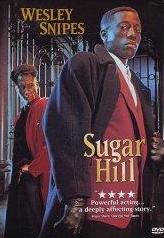
The film has great ambitions, but by 1994, all the gangster film cliches had been done to death (Wright’s character even goes so far as to name check GoodFellas right in the middle of the movie) and Sugar Hill borrows a little too liberally from many of them. The ending seems tacked on. In spite of all these factors, or maybe because of them, Snipes gives one of the best performances of his career. He works as Roemello Skuggs because his drug dealer is three dimensional: he is by turns, violent (in one scene, he head butts an arrogant African drug dealer so quickly, you feel like he head butted you), funny (in counteracting the tension between his brother and father -- a magnificent Clarence Williams III, as a more destructive version of Prince’s father from Purple Rain) and sweet (in his lush, romantic arc with the luminous Theresa Randle). We see the weight that he carries -- despite his always cool demeanor -- and that he wants to live a decent life, even if we know, somehow, that the odds are against his getting there. It is cliche to compare his performance in the recently released Brooklyn’s Finest to Nino Brown in New Jack City. But the former is actually closer to his turn as Roemello in Sugar Hill, with all its pathos and wanting to make up for lost time.
The action movies, even as his career ascended, became interchangeable (Boiling Point? U.S. Marshals?) but provided him with the opportunity to also act in low-budget, intimate projects (The Waterdance, One Night Stand). After taking 1996 off and a very humdrum 1997 (the highlight of which was his turn as a Barry Bonds-like player stalked by Robert DeNiro in The Fan), he became the first successful (grossing $150 million worldwide) black superhero in the sublime vampire action film, Blade.
JUST WHEN IT SEEMED like he couldn't be stopped, he was. The 1990s were drawing to a close and, just as he had ridden the tidal wave of the decade’s aggressiveness, conservative times were on the horizon. The trouble began in Ebony Magazine, of all places, where Snipes spoke of the appeal of his (then) Asian girlfriend within the context of angry black women of his past.
“I know we've all been hurt, and we’re all very wounded,” he said in November 1997. “We have to acknowledge that, both male and female, in the Black experience. We’re a wounded people... We don’t want to compromise. We feel like we’ve compromised enough. But in any relationship you have to compromise... And I say to Black women also, brothers who are very, very successful, or who have become somewhat successful, usually it’s been at a great expense, unseen by the camera’s eye.... I want to come home and I don’t want to argue. I want to be pleasing, but if I ask you to get me a glass of water, you’re going to say, ‘Them days is over.’ please. Come on... He doesn't want to come home to someone who’s going to be mean and aggravating and unkind and who is going to be ‘please me, please me.’.... So it’s very natural that he’s going to turn to some place that’s more compassionate.... You’ve worked hard and you deserve to come home to comforting.”
The fallout was swift and immediate. No African-American movie star has become such without the ardent support of black women. News of the quote spread and was discussed and internalized and personalized and misquoted and demonized. Wesley Snipes is arrogant. The fame’s went to his head. He thinks he’s too good for black women. That’s why he’s doing all this martial arts stuff, who this dude think he is, Bruce Lee? Was it true that he physically abused a famous black actress? Snipes threw a couple of well-intentioned alley oops to what was left of his black female fan base: he executive produced and co-starred in the little seen, Maya Angelou-directed gem Down in the Delta (which finally made good use of Alfre Woodard). Then he produced (and miscast himself) as the male lead in an HBO adaptation of Terry McMillan’s Disappearing Acts. But things were never the same.
The early 2000s were quiet, then turbulent. He remarried and had four more children. Aside form Blade’s sequel and (horrible) third installment, there wasn’t much going on. Then, in 2005, Snipes sued New Line Cinema in regards to the last Blade film, accusing them of withholding his salary, leaving him out of key casting decisions and cutting out his scenes in favor of his young, white co-stars.4 A year later, he was back in court, facing serious tax evasion charges that have continued to mar his name. In the meanwhile, his slide into the straight to DVD market began, a period where, as he recently told The Washington Post, “They were selling toasters, you know, and they just needed Wesley as the piece of bread.”5 Everyone had forgotten him. And another stylish, black action superstar slash thespian had become the biggest movie star in the world in his wake. Again, the same initials, but this guy's name was Will Smith.
In Brooklyn’s Finest, Snipes is well cast as a drug dealer fresh out of prison and looking to get his life back on track. Director Antoine Fuqua has said repeatedly that he cast Snipes because he thought his real life troubles might help mirror his character’s disorientation of being back on the block. Watching him onscreen, one is quickly reminded that it has been at least ten years since we’ve seen him and that those ten years couldn’t haven’t been easy. Acting alongside Don Cheadle, Snipes seems like the elder statesman, even though, in real life, they are just two years apart. Snipes’s movements are measured and when paired with the intense Cheadle, the contrast is startling. As an audience member, it is impossible for us to divorce his absence from our screens from the isolation his character, Cas, projects. It is the same reason why Mickey Rourke was so perfect in The Wrestler. It is ok for art to imitate life.


It is not yet clear if Brooklyn’s Finest is the kickoff to another outstanding decade of work for Wesley Snipes. I hope that it is. We need him -- and actors of his ilk -- desperately in this microwave age, where reality stars have longer television resumes than trained actors who have sacrificed to learn their craft. Robert Downey Jr., a two-time co-star of Snipes (in Murder at 1600 and One Night Stand) has found his way out of a far darker past and has emerged as an Oscar nominee and box office behemoth. The new decade is still undetermined, but it can be whatever we want it to be. And maybe he will never be the star he was, but he really doesn't have to be. To see him, still exciting and thrilling us, still defying the odds after all this time, on a platform worthy of his considerable charm and talent, is (for now at least) enough.
1 http://www.answers.com/topic/wesley-snipes
2 http://en.wikipedia.org/wiki/New_Jack_City
3 http://www.parade.com/celebrity/celebrity-parade/2010/03-01-wesley-snipes-brooklyns-finest.html
4 http://en.wikipedia.org/wiki/Wesley_Snipes#New_Line_lawsuit
5 http://www.washingtonpost.com/wp-dyn/content/article/2010/02/25/AR2010022505178.html


